
Product Description
Detailed Photos
Product Parameters
| Model | battery voltage V |
Rated speed rpm |
Peak Speed rpm |
Rated Power kw |
Peak Power kw |
Back EMF v |
Peak Current A |
Rated Torque N.m |
Peak Torque N.m |
Gearbox Ratio | Cooling Type |
| Powertrain:Motor and controller 2 in one | |||||||||||
| MC6-46-HP | 60 | 2500 | 6000 | 3 | 6 | 10.9 | 190 | 11.5 | 46 | / | natural cooling |
| MC10-75-HP | 72 | 3410 | 7500 | 10 | 20 | 12 | 320 | 28 | 85 | / | natural cooling |
| MC10-60-48-HP | 48 | 3500 | 6500 | 6 | 10 | 11.55 | 295 | 16.4 | 60 | / | natural cooling |
| MC20-80-96-HP | 96 | 4500 | 7500 | 10 | 20 | 12 | 320 | 21 | 85 | / | natural cooling |
| Powertrain:Motor and gearbox 2 in 1 with controller | |||||||||||
| P6-46-HP | 60 | 2500 | 6000 | 3 | 6 | 10.9±0.5 | 190 | 11.5 | 46 | 8.33 | natural cooling |
| P6-46-HP | 72 | 2500 | 6000 | 3 | 6 | 10.9±0.5 | 190 | 11.5 | 46 | 8.33 | natural cooling |
| P8-60-HP48 | 48 | 3000 | 6000 | 4 | 8 | / | 300 | 12.7 | 60 | 7.964 | natural cooling |
| P8-60-HP60 | 60 | 3000 | 6500 | 4 | 8 | / | 300 | 12.7 | 60 | 7.964 | natural cooling |
| P10-75-HP | 60 | 3000 | 7500 | 5 | 10 | 12.5±0.5 | 270 | 16 | 75 | 8.33 | natural cooling |
| P10-75-HP | 72 | 3000 | 7500 | 5 | 10 | 12.5±0.5 | 270 | 16 | 75 | 8.33 | natural cooling |
| P15-100-HP | 60 | 4000 | 7500 | 7.5 | 15 | 12.2±0.5 | 400 | 18 | 100 | 8.33 | natural cooling |
| P20-70-HP | 96 | 5200 | 9300 | 12 | 20 | 9.5 | 350 | 22 | 70 | 8.34 | natural cooling |
| P20-80-HP | 96 | 4500 | 7500 | 10 | 20 | 12 | 320 | 21 | 80 | 8.34 | natural cooling |
| P30-95-JM | 144 | 4500 | 8700 | 15 | 30 | 14 | 320 | 32 | 95 | 8.34 | natural cooling |
| Powertrain: Motor gearbox and controller 3 in one | |||||||||||
| P25-90-HP | 108 | 4500 | 8000 | 15 | 25 | 14 | 320 | 32 | 90 | 8.34 | natural cooling |
| P30-105-HP | 320 | 4500 | 8000 | 15 | 30 | 42 | 120 | 32 | 105 | 8.34 | natural cooling |
| P30-95-HP | 144 | 4500 | 8700 | 15 | 30 | 14 | 320 | 32 | 95 | 8.34 | natural cooling |
| P25-95-108-HP | 108 | 4775 | 8000 | 14 | 25 | 12.6 | 400 | 26 | 95 | 8.34 | natural cooling |
| P25-100-144-HP | 144 | 4775 | 8000 | 13 | 25 | 12.6 | 370 | 26 | 100 | 8.34 | natural cooling |
| P30-105-320-FHP | 320 | 4500 | 7700 | 15 | 30 | 42 | 120 | 32 | 105 | 8.34 | Controller with fan |
| P35-100-144-HP | 144 | 4500 | 8700 | 15 | 35 | 14 | 350 | 32 | 100 | 8.34 | water cooling |
| P45-120-HP | 320 | 4050 | 12000 | 20 | 45 | 24.5 | 235 | 47 | 120 | 10.3 | water cooling |
| P70-165-JL | 336 | 4050 | 12000 | 30 | 70 | 32.85 | 255 | 70 | 165 | 10.5 | water cooling |
| P100-220-HP | 360 | 5000 | 14000 | 50 | 100 | 31.6 | 355 | 95.5 | 220 | 10 | water cooling |
| P120-260-HP | 360 | 5000 | 14000 | 60 | 120 | 28.5 | 460 | 114 | 260 | 10 | water cooling |
Our Advantages
XIHU (WEST LAKE) DIS. POWER master 3 core technologies of electric vehicle power assembly: motor, electric control and reducer; and XIHU (WEST LAKE) DIS. POWER has a global vision, adopts international advanced management concept, integrates R & D, manufacturing, sales and service, and provides customers with low-speed, high torque, high integration, high-speed and low noise, strong overload capacity, high protection level, system maintenance free The shape is exquisite and beautiful, the protection function is complete, the vector control and various Parameters can be adjusted according to the customer requirements.
Company Profile
Xihu (West Lake) Dis. Power Co.,Ltd. was founded in March,2571. It is a national Hi-Tech enterprise which specialized in providing energy-saving system.
Xihu (West Lake) Dis. Power Co., Ltd. consists of Xihu (West Lake) Dis. Power (ZheJiang ) Co., Ltd., Xihu (West Lake) Dis. Power (ZheJiang ) Co., Ltd., and Xihu (West Lake) Dis. Power (HangZhou) Co., Ltd. The headquarters is located at No. 26, Yingbin Avenue, National High-tech Zone, HangZhou, ZheJiang . The company can annually produce 250,000 electric vehicle powertrains, 300,000 electric vehicle motors, and 300,000 controllers.
Xihu (West Lake) Dis. Power has a high-quality technical R&D team of more than 120 people, with high-tech talents selected from the National Ten Thousand Talents Program, National Science and Technology Innovation and Entrepreneurship Talents, ZheJiang Science and Technology Entrepreneurship Leaders, Xihu (West Lake) Dis.ang Top Talents, and Xihu (West Lake) Dis.ang Scarce Talents. And independently developed electric vehicle powertrains, permanent magnet synchronous motors, AC asynchronous motors, permanent magnet synchronous controllers, AC asynchronous controllers and other products, serving electric passenger cars, electric logistics vehicles, electric buses, electric minibuses, New energy vehicle industries such as electric forklifts, electric engineering vehicles, and electric logistics vehicles. Xihu (West Lake) Dis. Power has mastered the core technologies of electric vehicle motors, controllers, reducers and powertrains, established the ZheJiang Engineering Technology R&D Center, and listed the ZheJiang Provincial Key Laboratory, with more than 120 sets of experimental benches and experimental equipment. Design and development, performance verification, durability test, IP67 waterproof and dustproof test, mechanical vibration test, mechanical shock test, and full working conditions NVH experiment, high and low temperature cyclic impact experiment, high and low temperature loading operation experiment and other product design verification and testing capabilities.
Xihu (West Lake) Dis. Power has built an electric vehicle powertrain automated assembly workshop, an electric motor automated assembly workshop, a controller CHINAMFG automatic placement workshop, an automated winding and embedding workshop, a casting processing center, an online spraying center, a complete machine performance digital inspection center, and Created a zero-defect quality assurance system to provide customers with perfect products and high-quality services. Xihu (West Lake) Dis. Power has obtained the automotive industry IATF16949:2016 quality management system certification, ISO9001:2015 quality management system certification, ISO14001:2015 environmental management system certification, ISO45001:2018 occupational health and safety management system certification, EU product safety CE certification, and U.S. product safety Performance UL certification, Korean electrical product safety KC certification, etc.
At present, the company has formed a research and development platform suitable for 6 categories of electric drive products such as pure electric passenger vehicles, pure electric commercial vehicles, pure electric special vehicles, extended-range hybrids, electric vehicles, and intelligent unmanned vehicles, forming a 1.2kw- 500kw power series products, supporting the development of more than 260 varieties of electric power system products for domestic and foreign vehicle companies and power system integrators. In terms of application in the electric vehicle market, the company’s products are used in electric vehicles such as FIAT, Xpeng, BAIC, Geely, BYD, Changan, Xihu (West Lake) Dis.feng, Xihu (West Lake) Dis., Haima, Zotye, GM, King Long, Xihu (West Lake) Dis., Foton, Great Wall, Weimar and other electric vehicles. It has been successfully applied and has been among the best in market share for many years. The company’s products sell well all over the country, and are exported to Europe, America, India, the Middle East, Africa and Southeast Asia.
Xihu (West Lake) Dis. Power, Innovation Technology!
FAQ
Q1. What are your terms of packing?
A: We pack our goods in neutral wooden boxes and paper cartons. If you have a legally registered brand, we can pack the goods in your branded boxes after getting your authorization letters.
Q2. What are your terms of payment?
A: T/T 30% as deposit, and 70% before delivery. We’ll send you the photos of the products and packages before you pay the balance. For big orders, we accept L/C.
Q3. What are your terms of delivery?
A: EXW, FOB.
Q4. How about your delivery time?
A: It will take 15 to 45days after receiving your advance payment. The specific delivery time depends on the items and the quantity of your order.
Q5. Can you produce according to the samples?
A: Yes, we can produce your samples or technical drawings. We can produce the molds and fixtures in-house.
Q6. Do you test all your goods before delivery?
A: Yes, we have a 100% test before delivery, if necessary we can send an inspection report before delivery.
Q7. How long is your warranty period?
A: In general,2 years after deliveried
Q8. Do you have any certificates?
A: CE,SGS,ISO9001,IATF16949,UL,Etc
Q9. Do you have the import & export license?
We are official import & export licensed manufacturer.
Certifications
| Application: | Universal, Industrial, Car |
|---|---|
| Operating Speed: | Low Speed |
| Operation Mode: | Electric Motor |
| Magnetic Structure: | Permanent Magnet |
| Function: | Driving |
| Structure: | Rotating Armature Type (Pole Fixed) |
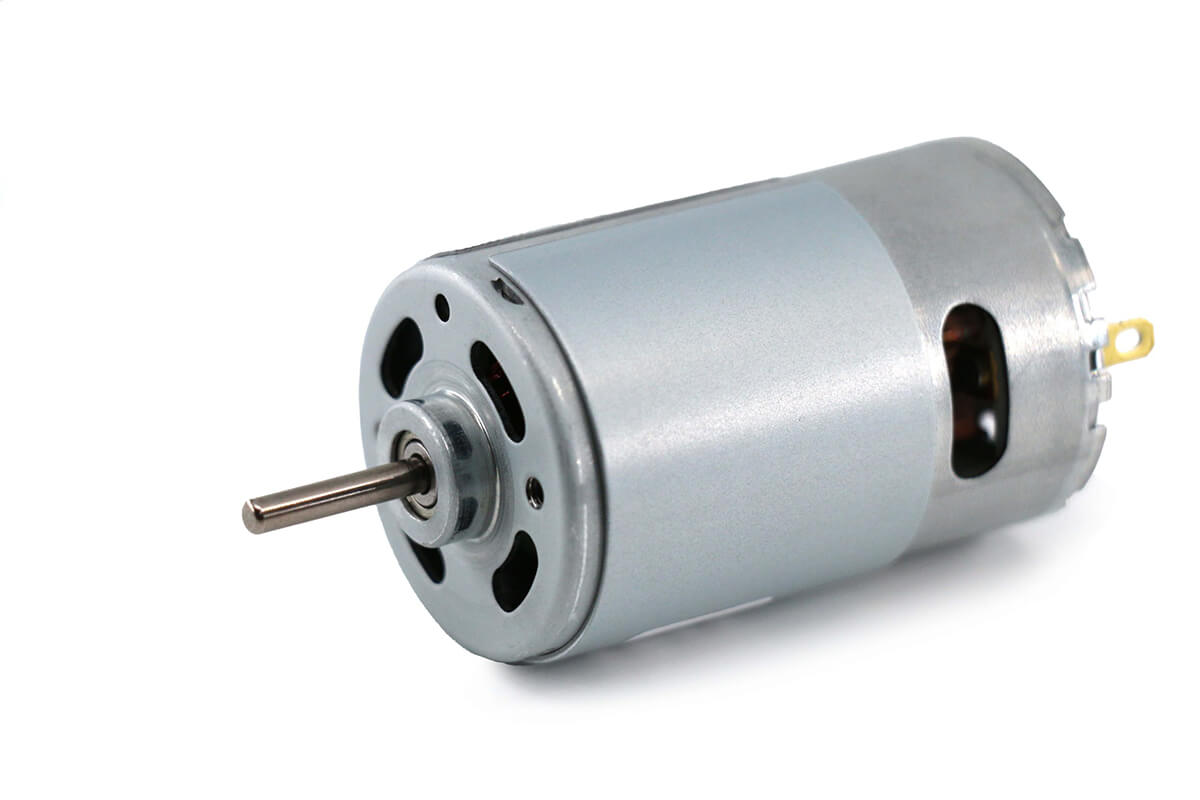
What is a DC motor, and how does it differ from other types of electric motors?
A DC (Direct Current) motor is an electric motor that converts electrical energy into mechanical motion. It operates based on the principle of electromagnetic induction and the interaction between current-carrying conductors and magnetic fields. DC motors are widely used in various applications due to their simplicity, controllability, and versatility. Here’s a detailed explanation of what a DC motor is and how it differs from other types of electric motors:
1. Basic Operation:
In a DC motor, electrical energy is supplied to the motor’s armature through a DC power source, typically a battery or a rectified power supply. The armature consists of multiple coils or windings that are evenly spaced around the motor’s rotor. The rotor is a cylindrical core with a shaft that rotates when the motor is energized. When current flows through the armature windings, it creates a magnetic field that interacts with the fixed magnetic field produced by the motor’s stator. This interaction generates a torque, causing the rotor to rotate.
2. Commutation:
DC motors employ a commutator and brushes for the conversion of electrical energy and the rotation of the rotor. The commutator consists of a segmented cylindrical ring attached to the rotor shaft, and the brushes are stationary conductive contacts that make contact with the commutator segments. As the rotor spins, the brushes maintain contact with the commutator segments, periodically reversing the direction of the current flow in the armature windings. This reversal of current flow in the armature windings ensures continuous rotation of the rotor in the same direction.
3. Types of DC Motors:
DC motors can be classified into different types based on their construction and the method of field excitation. The two main types are:
- Brushed DC Motors: Brushed DC motors have a mechanical commutator and brushes to switch the current direction in the armature windings. These motors are relatively simple, cost-effective, and offer good torque characteristics. However, the commutator and brushes require regular maintenance and can generate electrical noise and brush wear debris.
- Brushless DC Motors (BLDC): Brushless DC motors, also known as electronically commutated motors (ECMs), use electronic circuits and sensors to control the current flow in the motor windings. They eliminate the need for brushes and commutators, resulting in reduced maintenance and improved reliability. BLDC motors offer higher efficiency, smoother operation, and better speed control compared to brushed DC motors.
4. Speed Control:
DC motors provide excellent speed control capabilities. By adjusting the voltage applied to the motor, the speed of the DC motor can be regulated. Lowering the voltage reduces the motor’s speed, while increasing the voltage increases the speed. This feature makes DC motors suitable for applications that require precise speed control, such as robotics, conveyor systems, and electric vehicles.
5. Advantages and Disadvantages:
DC motors have several advantages, including:
- Simple construction and easy maintenance (for brushed DC motors).
- High starting torque.
- Precise speed control.
- Good controllability over a wide range of loads.
However, DC motors also have some limitations, such as:
- Brushed DC motors require periodic maintenance and have limited brush life.
- Brushed DC motors can generate electrical noise.
- Brushless DC motors are often more expensive compared to brushed DC motors.
6. Differences from Other Electric Motors:
DC motors differ from other types of electric motors, such as AC (Alternating Current) motors, in several ways:
- Power Source: DC motors require a DC power source, while AC motors operate from an AC power supply.
- Speed Control: DC motors offer precise speed control by adjusting the applied voltage, whereas AC motors typically rely on frequency control for speed regulation.
- Construction: DC motors use a commutator and brushes (in brushed DC motors) or electronic commutation (in brushless DC motors), while AC motors do not require commutation.
- Starting Torque: DC motors typically provide higher starting torque compared to AC motors.
Overall, DC motors are versatile and widely used in various applications due to their controllability, speed regulation capabilities, and simplicity. The advancements inpower electronics and motor control technologies have further enhanced the performance and efficiency of DC motors, making them a popular choice in many industries.
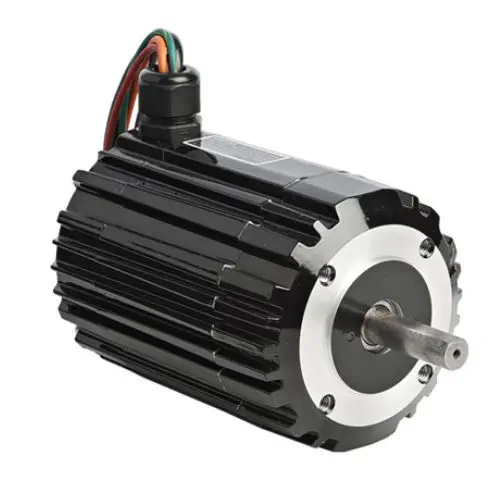
How is the efficiency of a DC motor determined, and what factors can affect it?
In a DC (Direct Current) motor, efficiency refers to the ratio of the motor’s output power (mechanical power) to its input power (electrical power). It is a measure of how effectively the motor converts electrical energy into mechanical work. The efficiency of a DC motor can be determined by considering several factors that affect its performance. Here’s a detailed explanation of how the efficiency of a DC motor is determined and the factors that can influence it:
The efficiency of a DC motor is calculated using the following formula:
Efficiency = (Output Power / Input Power) × 100%
1. Output Power: The output power of a DC motor is the mechanical power produced at the motor’s shaft. It can be calculated using the formula:
Output Power = Torque × Angular Speed
The torque is the rotational force exerted by the motor, and the angular speed is the rate at which the motor rotates. The output power represents the useful work or mechanical energy delivered by the motor.
2. Input Power: The input power of a DC motor is the electrical power supplied to the motor. It can be calculated using the formula:
Input Power = Voltage × Current
The voltage is the electrical potential difference applied to the motor, and the current is the amount of electrical current flowing through the motor. The input power represents the electrical energy consumed by the motor.
Once the output power and input power are determined, the efficiency can be calculated using the formula mentioned earlier.
Several factors can influence the efficiency of a DC motor:
1. Copper Losses:
Copper losses occur due to the resistance of the copper windings in the motor. These losses result in the conversion of electrical energy into heat. Higher resistance or increased current flow leads to greater copper losses and reduces the efficiency of the motor. Using thicker wire for the windings and minimizing resistance can help reduce copper losses.
2. Iron Losses:
Iron losses occur due to magnetic hysteresis and eddy currents in the motor’s iron core. These losses result in the conversion of electrical energy into heat. Using high-quality laminated iron cores and minimizing magnetic flux variations can help reduce iron losses and improve efficiency.
3. Friction and Windage Losses:
Friction and windage losses occur due to mechanical friction between moving parts and air resistance. These losses result in the conversion of mechanical energy into heat. Proper lubrication, efficient bearing systems, and aerodynamically optimized designs can help minimize friction and windage losses.
4. Brush and Commutator Losses:
In brushed DC motors, brush and commutator losses occur due to the friction and electrical resistance at the brush-commutator interface. These losses result in the conversion of electrical energy into heat. Using high-quality brushes and commutators, reducing brush voltage drop, and minimizing the number of commutator segments can help reduce these losses.
5. Magnetic Field Design:
The design of the magnetic field in the motor significantly affects its efficiency. Optimizing the magnetic field for the specific application, such as selecting appropriate magnet materials or designing efficient electromagnets, can improve the motor’s efficiency.
6. Motor Load:
The load on the motor, including the torque and speed requirements, can impact its efficiency. Operating the motor close to its optimal load conditions or utilizing speed control techniques, such as pulse width modulation (PWM), can help improve efficiency by reducing unnecessary power consumption.
7. Motor Size and Construction:
The size and construction of the motor can influence its efficiency. Properly sizing the motor for the intended application and optimizing the design for reduced losses, improved cooling, and efficient heat dissipation can enhance overall efficiency.
It’s important to note that the efficiency of a DC motor is typically highest at or near its rated load conditions. Deviating significantly from the rated load can result in reduced efficiency.
In summary, the efficiency of a DC motor is determined by comparing the output power to the input power. Factors such as copper losses, iron losses, friction and windage losses, brush and commutator losses, magnetic field design, motor load, and motor size and construction can all influence the efficiency of a DC motor. By considering and optimizing these factors, the overall efficiency of the motor can be improved.
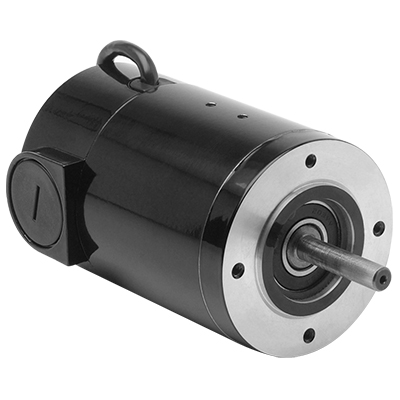
How does the size and power rating of a DC motor affect its suitability for different tasks?
The size and power rating of a DC (Direct Current) motor play crucial roles in determining its suitability for different tasks and applications. The size and power rating directly impact the motor’s performance characteristics, including its torque output, speed range, efficiency, and overall capabilities. Here’s a detailed explanation of how the size and power rating of a DC motor affect its suitability for different tasks:
Size of DC Motor:
The size of a DC motor refers to its physical dimensions, including its diameter, length, and overall volume. The size of the motor influences its ability to fit into specific spaces or applications with space constraints. Here are some key considerations regarding the size of a DC motor:
1. Space Limitations: In applications where space is limited, such as small robotic systems or compact machinery, smaller-sized DC motors are preferred. These motors provide a more convenient and efficient integration into the overall system design.
2. Weight Constraints: Certain applications, such as drones or lightweight robots, may have strict weight limitations. Smaller-sized DC motors are generally lighter, making them more suitable for weight-sensitive tasks where minimizing the overall system weight is essential.
3. Cooling and Heat Dissipation: The size of a DC motor can impact its ability to dissipate heat generated during operation. Smaller-sized motors may have less surface area for heat dissipation, which can lead to increased operating temperatures. In contrast, larger-sized motors typically have better heat dissipation capabilities, allowing for sustained operation under heavy loads or in high-temperature environments.
Power Rating of DC Motor:
The power rating of a DC motor refers to the maximum power it can deliver or the power it consumes during operation. The power rating determines the motor’s capacity to perform work and influences its performance characteristics. Here are some key considerations regarding the power rating of a DC motor:
1. Torque Output: The power rating of a DC motor is directly related to its torque output. Higher power-rated motors generally provide higher torque, allowing them to handle more demanding tasks or applications that require greater force or load capacity. For example, heavy-duty industrial machinery or electric vehicles often require DC motors with higher power ratings to generate sufficient torque for their intended tasks.
2. Speed Range: The power rating of a DC motor affects its speed range capabilities. Motors with higher power ratings can typically achieve higher speeds, making them suitable for applications that require rapid or high-speed operation. On the other hand, lower power-rated motors may have limited speed ranges, making them more suitable for applications that require slower or controlled movements.
3. Efficiency: The power rating of a DC motor can impact its efficiency. Higher power-rated motors tend to have better efficiency, meaning they can convert a larger proportion of electrical input power into mechanical output power. Increased efficiency is desirable in applications where energy efficiency or battery life is a critical factor, such as electric vehicles or portable devices.
4. Overload Capability: The power rating of a DC motor determines its ability to handle overloads or sudden changes in load conditions. Motors with higher power ratings generally have a greater overload capacity, allowing them to handle temporary load spikes without stalling or overheating. This characteristic is crucial in applications where intermittent or varying loads are common.
Overall, the size and power rating of a DC motor are important factors in determining its suitability for different tasks. Smaller-sized motors are advantageous in space-constrained or weight-sensitive applications, while larger-sized motors offer better heat dissipation and can handle heavier loads. Higher power-rated motors provide greater torque, speed range, efficiency, and overload capability, making them suitable for more demanding tasks. It is crucial to carefully consider the specific requirements of the application and choose a DC motor size and power rating that aligns with those requirements to ensure optimal performance and reliability.


editor by CX 2023-11-27